
Professional Furnace Installation In Gastonia
Does your furnace feel like it’s on its last legs? Or maybe you just moved into a Gastonia home and want to know your heating options before winter hits.
Either way, you probably have a few worries. What will it cost? How long will the job take? And who can you actually trust to do it right?
Those questions are completely normal.
Here’s something I wish more homeowners knew: every house has unique heating needs. Your neighbor’s furnace might be a terrible fit for your home. That’s why Dependaworthy HVAC starts every job with a professional assessment and a thorough evaluation before recommending any system.
The skilled technicians look at your heating needs and your budget, then find the right match.
This page walks you through everything about Furnace Installation In Gastonia, NC. You’ll learn about furnace types, how furnaces stack up against heat pumps, and what the installation process really looks like.
We’ll also cover why professional installation matters so much. So grab a warm drink, and let’s go through it together.
Key Takeaways
- Professional furnace installation in Gastonia requires proper assessment, sizing, and permits to ensure efficient heating and compliance with local codes.
- Furnaces excel in extreme cold weather, while heat pumps offer lower energy costs in milder climates; dual-fuel systems combine both advantages.
- Dependaworthy Heating & Air provides transparent pricing, 24/7 emergency services, and customized furnace solutions that fit your home’s specific heating needs.
- Manual J load calculations determine correct furnace sizing to prevent short-cycling, uneven heating, and wasted energy throughout your home.
- Upgrading to a new furnace reduces utility bills, improves comfort, and enhances indoor air quality with proper system selection and installation.
 Furnace Heating Systems and Professional Installation in Gastonia:
You need the right furnace heating system to keep your Gastonia home warm all winter long. Professional installation makes sure that system runs efficiently and lasts for many years.
Let’s start with the basics: what kinds of furnaces are out there, and which one fits your home?
Types of Furnace Heating Systems:
Residential furnaces come in a few main types. The big difference between them is the fuel they use, and that affects both your upfront cost and your monthly bills.
- Natural gas furnaces burn gas from a utility line to produce strong, fast heat. They’re a common choice in Gastonia homes that already have a gas connection.
- Propane furnaces work much like gas furnaces but pull fuel from a tank on your property. They suit homes without access to a gas line.
- Oil furnaces burn heating oil stored in a tank. They produce plenty of heat but need regular fuel deliveries.
- Electric furnaces use heating elements instead of a flame. They’re simpler to install and need no venting, though electricity can cost more per unit of heat than gas.
Efficiency matters too. High-efficiency condensing furnaces, like the 95% AFUE models Dependaworthy installs, pull extra heat from exhaust gases before venting them outside. That means more of your fuel dollar turns into warmth for your home.
Not sure which type makes sense for you? That’s exactly what the in-home assessment is for.
Furnace VS Heat Pumps?
This is one of the most common questions I hear from Gastonia homeowners. Both systems can keep your house warm, but they work in very different ways.
| Feature | Furnace Heating Systems | Heat Pumps |
|---|---|---|
| How It Works | Burns natural gas or propane to create strong heat inside your home | Moves existing heat from outside air into your home, even in cold weather |
| Cold Weather Performance | Excels during very cold weather and harsh winter conditions | Operates efficiently in mild to moderate cold temperatures |
| Energy Costs | Higher operating costs depend on fuel prices and usage patterns | Offers lower energy costs and reduces monthly utility bills |
| Functionality | Provides heating only, requiring separate cooling systems | Delivers both heating and cooling functions in one unit |
| Power Source | Requires fuel supply like natural gas or propane connections | Operates electrically, no fuel combustion needed |
| Best For Your Home | Works well if you experience extremely cold winters consistently | Suits homes in areas with milder winters and moderate temperatures |
| Installation Considerations | Needs proper venting and fuel line connections for safe operation | Requires outdoor unit placement and electrical upgrades possibly |
| Long-Term Investment | Lower upfront cost but higher ongoing fuel expenses over time | Higher initial investment but saves money on energy bills yearly |
Want a real cost anchor? Per 2026 HVAC cost-comparison data, a standard gas furnace typically costs $5,000 to $9,000 installed. Pair it with a new AC unit and you’re looking at $9,000 to $17,000, which lands in the same range as a full heat pump system.
So which one is right for you? It depends on a few things specific to your situation:
- How cold your part of Gastonia gets in a typical winter
- How well your home is insulated right now
- Local energy prices for gas versus electricity
- Your comfort style: furnaces deliver instant, intense heat, while heat pumps warm your home gradually
Many homeowners find that a dual-fuel system gives them the best of both. This setup pairs a heat pump with a gas furnace. During mild stretches, the heat pump does the work and keeps bills low. When a real cold snap hits, the furnace kicks in automatically for that powerful warmth you need.
One quick heads-up on incentives. According to 2026 HVAC industry cost-comparison reporting covering the federal tax credit changes, the federal Section 25C Energy Efficient Home Improvement Credit ended on December 31, 2025. That means neither a gas furnace nor a heat pump installed in 2026 gets a federal tax credit. Some state-run HEAR/HEEHRA rebates still exist in certain states, but they exclude gas furnaces. Why does this matter? Older articles still promise tax savings that no longer apply, so run your cost math on today’s numbers.
A Gastonia homeowner shared their experience after installing a dual-fuel system last winter. Their energy bills stayed lower during the fall and spring months thanks to the heat pump. Once true cold arrived, the furnace took over with no gaps in comfort. They got the strengths of both systems without spending extra money.
Customized Furnace Heating Systems Explained:
Your home’s heating needs are unique, and customized furnace heating systems address exactly that. Local providers in Gastonia offer gas, oil, electric, and propane systems, and each one has its own advantages for your situation.
A certified comfort advisor can evaluate your home during a free consultation. They’ll recommend the right system based on your budget, home size, and energy goals. Over 99 years of HVAC experience in Gastonia means these professionals know which solution works best for homes like yours.
Upgrading to a new furnace delivers benefits you’ll notice right away:
- Your utility bills drop significantly
- Your home stays more comfortable year-round
- Your indoor air quality improves noticeably
Proper system sizing is critical. An oversized or undersized furnace wastes energy and fails to keep every room comfortable. That’s where Manual J comes in. Per ACCA’s Manual J Residential Load Calculation technical standard, Manual J is the official residential load calculation standard from the Air Conditioning Contractors of America. It factors in square footage, window sizes and types, insulation levels, and ceiling height instead of relying on square footage alone. In plain terms, it’s the difference between a guess and a measurement.
A Whole Home Comfort and Energy Audit takes this even further. It pinpoints exactly where your heating and cooling issues occur, so you get a solution that matches your actual needs rather than guesswork.
Here’s what that looks like in real life. A Gastonia homeowner replaced a 20-year-old gas furnace with a right-sized 95% AFUE condensing furnace after a Manual J assessment from Dependaworthy technicians. Monthly gas usage dropped from 120 therms to 78 therms in the first winter, a 35% reduction. Estimated annual savings came to about 480 therms based on local winter months. The homeowner also noted that rooms now heat more evenly throughout the house.
The right furnace system transforms how your home feels while reducing what you spend on energy each month.
Now let’s look at the professional furnace installation process Gastonia technicians follow to get your system running perfectly.
Gastonia, NC – Furnace Installation Process Explained:
Professional furnace installation in Gastonia takes careful planning and expert execution. Your technician follows a detailed process that protects your home and meets all local codes.
Here’s how it goes, step by step.
Assessment and Permits
- Your HVAC contractor starts with an in-home assessment to evaluate your heating needs and space layout.
- A Manual J load calculation gets performed during this visit to determine the right furnace size for your home.
- The technician inspects your gas line capacity to confirm it supports the new furnace safely.
- Venting inspections happen next, checking that exhaust pathways meet manufacturer and local standards.
- Your contractor obtains mechanical permits required by Gastonia before any installation work begins.
- Proper furnace sizing gets confirmed to prevent short-cycling, uneven heating, and energy waste.
That permit step isn’t just company policy. Per North Carolina Mechanical Code permitting guidance, NC requires a mechanical permit in all 100 counties for HVAC work, including straight furnace replacements. The permit triggers inspections at both rough-in and final completion. If your furnace dies in the middle of a cold snap, there’s an exception that lets emergency replacements get permitted the next business day. So you never have to choose between staying warm and staying legal.
Installation and Testing
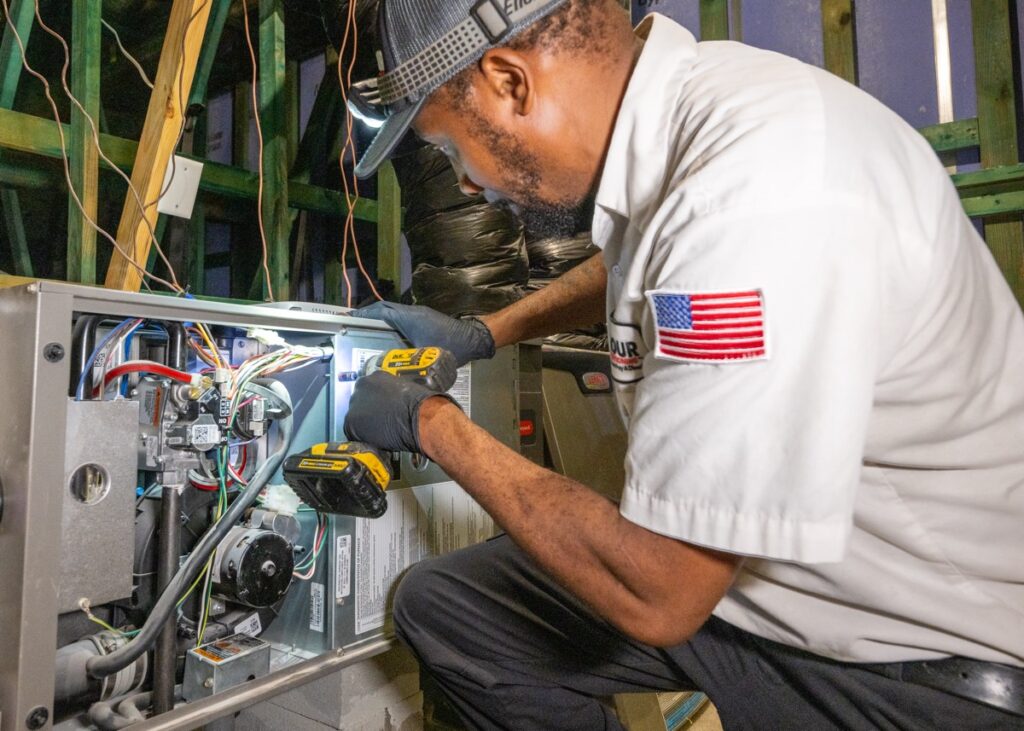
- Installation crews position the furnace in your chosen location, typically a basement or utility space.
- Gas line connections get made with precision to ensure safe fuel delivery to your heating system.
- Venting systems are installed correctly to direct combustion gases safely outside your home.
- Combustion setup gets completed according to manufacturer specifications for the best performance.
- Your new furnace undergoes thorough inspection to verify compliance with local regulations and standards.
- The technician tests all components, controls, and safety features before declaring the installation complete.
- Annual maintenance plans become available to keep your furnace running efficiently and protect your warranty.
What the Timeline Looks Like
A typical installation follows a clear schedule, so you can plan around it.
| Day | What Happens |
|---|---|
| Day 1 | In-home assessment and Manual J calculation |
| Day 2 | Permit submission |
| Day 5 | Parts typically arrive |
| Day 7 | Installation by a crew of three technicians, with combustion and venting inspections two hours after completion |
| Within 3 business days | Final city mechanical inspection |
Along the way, Gastonia technicians complete a specific checklist: the Manual J record, a gas line capacity test, a vent draft test, a CO baseline reading, and a final homeowner orientation. This structured approach means you always know where things stand with inspections and permits.
Why Schedule Dependaworthy Heating & Air For Your Furnace Installation In Gastonia, NC?
Dependaworthy One Hour Heating & Air stands out for furnace installation in Gastonia, NC for a simple reason: the team shows up on time and does the job right the first time.
You get transparent pricing with no hidden charges, so you know exactly what you’ll pay before work begins. The locally owned company responds quickly, and their technicians bring real experience to every installation.
Customer testimonials consistently praise the crew for their professionalism and efficiency. That means you get the same service satisfied homeowners in your community have already experienced.
Here’s what else you get with Dependaworthy:
- 24/7 emergency HVAC services, so help arrives whenever you need it, even outside normal business hours
- A furnace heating system customized to fit your specific home, so your new installation works perfectly for your space
- AC maintenance and repair services from the same trusted team
- Ductwork solutions, including air duct cleaning and Aeroseal duct sealing
Your furnace installation deserves experts who care about your comfort and satisfaction. With Dependaworthy, one team handles all your heating and cooling needs in Gastonia.
Ready to get started on your Furnace Installation In Gastonia, NC? Schedule your free consultation, and let’s get your home warm and comfortable before the cold sets in.
F.A.Q.’s – Furnace Install in Gastonia
1. Why should I hire a professional for furnace installation in Gastonia?
A licensed technician sizes your unit correctly, handles all the gas and vent connections safely, and keeps your warranty intact. Most major manufacturers like Carrier and Trane will void your warranty if someone without proper certification does the install.
2. How long does a furnace installation take?
Most straightforward replacements take four to six hours, but if your ductwork needs upgrading or you’re switching fuel types, plan on a full day or even two.
3. What does professional furnace installation cost in Gastonia?
In the Charlotte metro area, you’re typically looking at $4,000 to $8,500 for a complete installation in 2026, depending on your furnace’s efficiency rating and size. Your contractor should give you a detailed written estimate that covers the equipment, labor, permits, and hauling away your old unit.
4. Do I need a permit for a new furnace in Gastonia?
Yes, Gaston County requires a mechanical permit for any furnace replacement, and your installer will handle pulling it. An inspector will then verify your venting, gas connections, and electrical work meet North Carolina’s building code.