
Why Skipping Heater Maintenance Lead To Higher Bills
I’ve been around heaters long enough to notice a pattern. When someone complains about rising energy bills, nine times out of ten there’s a pause, then a shrug, then a line like, “Yeah… we’ve been skipping heater maintenance for a while.”
I get it. Life’s busy. If the heater still turns on, it feels fine to leave it alone. But heaters have long memories. They remember every ignored rattle, every dirty filter, every skipped checkup. And they send the bill later.
Let’s talk about why skipping heater maintenance quietly drains your wallet, often without you noticing until it’s already happening.
The quiet inefficiency nobody notices
Heaters don’t usually fail all at once. They fade. Slowly.
When you’re skipping heater maintenance, small issues stack up. Dust builds on burners. Sensors drift out of calibration. Airflow tightens up just enough to make the system work harder, longer, louder.
The thermostat says 70. The heater says, “Give me a minute.” That extra minute costs money. Multiply it by every cycle, every cold morning, every long night, and the meter keeps spinning.
I once serviced a unit that “worked fine,” according to the homeowner. It did. It also ran 22 minutes per cycle instead of 12. Their gas bill told the rest of the story.
Dirt is an energy tax
Here’s a blunt truth: dirt makes heaters dumb. A dirty system can’t read itself properly. Heat exchangers don’t transfer warmth like they should. Blowers push against resistance, Burners run unevenly, air quality suffers.
Skipping heater maintenance lets that dirt settle in and charge rent. And the heater pays it by burning more fuel or pulling more power than needed.
Think of it like driving with the parking brake half on. The car moves, sure. But you feel it. The engine feels it. Your wallet really feels it.
Short cycling wastes money fast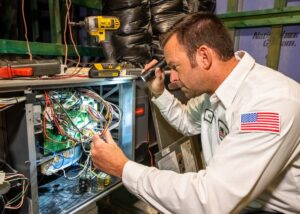
Short cycling is one of my least favorite things to hear during an install. Click. Roar. Click. Roar. Over and over.
This often shows up after years of skipping heater maintenance. A sensor gets dirty. A flame rod struggles. A limit switch trips early. The heater fires, shuts down, fires again.
Each start uses more energy than steady operation. It’s like flooring your truck every block instead of cruising. Loud, inefficient, expensive.
And here’s the kicker: many homeowners never notice. They just see higher bills and assume prices went up.
Airflow problems hide in plain sight
Restricted airflow is sneaky. Filters clog. Duct connections loosen. Blowers lose efficiency.
When you’re skipping heater maintenance, airflow slowly drops. Heat stays trapped where it shouldn’t. The system compensates by running longer, sometimes hotter than designed.
I’ll admit it, I’ve pulled filters that looked like felt blankets. The homeowner laughed. Then they saw the bill comparison from before and after service. The laughter stopped.
Heat loss makes heaters work overtime
Maintenance isn’t just about the heater box itself. It’s about how heat moves through the system.
Loose panels, failing seals, cracked duct joints—all common results of skipping heater maintenance—let warm air escape before it ever reaches the room.
That means the heater keeps pushing, trying to satisfy the thermostat while heat leaks away like air from a slow tire. You pay for warmth that never arrives.
Small problems turn into expensive habits
Here’s where bills creep up without a dramatic failure.
- A weak igniter takes longer to light.
- A tired motor draws extra amps.
- A misaligned burner burns fuel unevenly.
None of these stop the heater outright. But skipping heater maintenance lets them hang around, quietly increasing energy use month after month.
I’ve had customers swear nothing changed in their house. Same habits. Same settings. The heater was the only thing aging in the background.
The psychological trap of “it still works”
This is the part that gets good people. If a heater runs, it feels okay to ignore it. Skipping heater maintenance becomes routine. Years pass. Bills rise. The heater struggles.
Then one winter, it breaks. The repair costs more. The efficiency drops further. And suddenly the heater gets blamed for being “old,” when really it’s just tired from neglect.
Dependable + Trustworthy = DEPENDAWORTHY!
That line sticks with me because that’s what maintenance is supposed to protect. Reliability. Predictability. Bills that don’t surprise you.
Why maintenance keeps bills predictable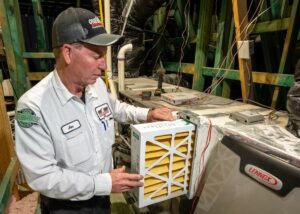
A maintained heater runs closer to its original efficiency. It cycles normally. It heats evenly. It stops wasting energy fighting itself.
Skipping heater maintenance breaks that balance. The heater still heats, but it does it the hard way. And the utility company charges for every extra step.
I’ve seen bills drop 15–25% after a proper service on systems that “worked fine.” Same house. Same winter. Different outcome.
FAQ: Heater maintenance and energy bills
Why does skipping heater maintenance raise bills even if nothing is broken?
Because inefficiency comes before failure. Dirty parts, weak airflow, and drifting sensors all increase run time and energy use long before a breakdown.
How often should heater maintenance happen to keep bills steady?
Once a year is the sweet spot for most systems. Waiting longer invites hidden energy loss.
Can skipping heater maintenance damage the heater permanently?
Yes. Extra strain shortens component life. Motors, igniters, and heat exchangers suffer the most.
Will a new heater still have higher bills if maintenance is skipped?
Absolutely. New systems lose efficiency faster when ignored. Skipping heater maintenance levels the playing field between new and old in the worst way.
Is heater maintenance cheaper than higher energy bills?
Every time. Maintenance costs are predictable. Utility overuse compounds monthly and never pays you back.
If there’s one thing I’ve learned, it’s this: heaters remember how they’re treated. Skipping heater maintenance doesn’t cause instant chaos. It causes slow, expensive habits. And habits are harder to break than breakdowns.
